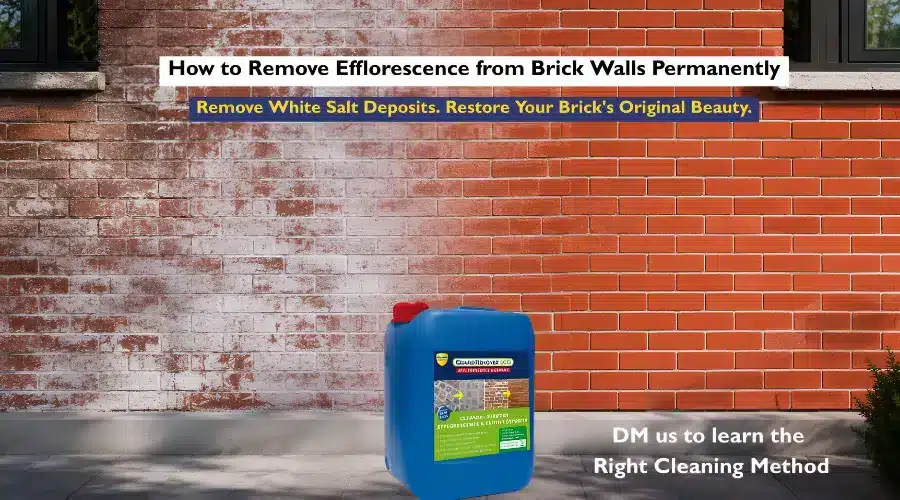
Do you see any chalky, white powder on your brick walls lately? Does it keep coming back even after washing it off?
Don’t worry. Efflorescence is among the most common issues that are experienced with brick, concrete, and other masonry surfaces. Not only does this make your walls look old and neglected, but it also shows you that there’s moisture movement through the wall.
Are you seeking a solution for cleaning efflorescence from brick walls? Efflorescence cleaning is not just about washing the whitish stain. There are reasons why efflorescence forms, how to clean it, and ways to prevent it from forming again.
In this article, we’ll share everything you need to know about efflorescence, including the best efflorescence removal methods, effective cleaning products, and practical tips to keep your brick walls looking clean for years to come.
What Is Efflorescence?
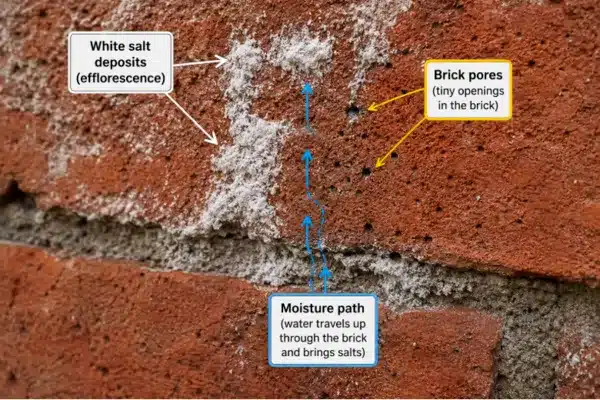
Efflorescence is the white powder formed on brick walls, concrete, stones, and other types of masonry surfaces.
This white formation occurs as a result of water getting into the pores of the building material, causing salts in the material to dissolve and move with the water to the surface, where they are left after the evaporation of the water.
Places where efflorescence can be found include:
- Brick walls
- Concrete walls
- Masonry constructions
- Stone walls
- Boundary walls
- Recent constructions
It may look like just a cosmetic problem, but efflorescence generally implies moisture movement through the surface.
Why Does Efflorescence Keep Coming Back?
Efflorescence keeps coming back because the underlying cause hasn’t been fixed. Simply washing away the white deposits removes the visible stain, but it doesn’t stop moisture from moving through the brick or masonry. As long as water continues to seep into the wall and dissolve the natural salts inside, those salts will keep rising to the surface and reappear after the water evaporates.
Examples of the causes of efflorescence include:
- Water penetration: Cracks, damaged mortar joints, leaking gutters, or poor drainage allow water to enter the masonry.
- High moisture levels: Rain, groundwater, condensation, or inadequate waterproofing can keep the wall damp.
- Porous building materials: Bricks and concrete naturally absorb moisture, making it easier for salts to travel to the surface.
- Poor drainage: Water collecting around the base of the wall can increase moisture absorption over time.
If moisture penetration is not curbed, even the best cleaning techniques cannot offer a long-term solution.
This is why learning how to permanently eliminate efflorescence requires tackling the problem at its root cause.
Why You Shouldn't Ignore Efflorescence
Although efflorescence doesn’t usually damage your walls straight away, ignoring the efflorescence causes can lead to recurring moisture issues and more extensive maintenance later on.
These include:
- Decreased aesthetics of brick walls
- Giving buildings an old look
- Showing that there is too much moisture inside the wall
- Promoting further staining
- Higher maintenance costs in the future
Early treatment of efflorescence on brick walls helps maintain their original appearance.
Permanently Getting Rid of Efflorescence on Brick Walls
1. Apply Specific Efflorescence Remover
The most effective solution is to use a specific efflorescence remover designed for mineral building materials.
When used correctly, an efflorescence remover effectively removes the visible white stains. A specialized solution is formulated to dissolve salt deposits without damaging masonry surfaces.
For example, the Guard Remover Eco Efflorescence & Cement solution is designed to:
- Remove white salt formations
- Eliminate efflorescence
- Remove cement stains left during construction
This product is suitable for:
- Brick
- Concrete
- Masonry
- Natural stone
- Building facades
When applied according to the manufacturer’s instructions, it can help restore the original appearance of your building materials.
For long-term results, it’s also important to address the source of moisture to reduce the risk of efflorescence returning.
2. Remove Cement Stains Left During Construction
A common mistake after construction is leaving cement stains on brickwork.
These stains can trap dust and moisture, causing the wall to look dirty even before efflorescence becomes visible.
Applying a professional cement stain remover after construction helps restore the original appearance of the brick and prepares the surface for further protection.
This is especially important for:
- Recently constructed houses
- Commercial buildings
- Boundary walls
- Brick facades
3. Clean the Surface Properly
To obtain the best results, cleaning should always follow the proper procedure.
Common cleaning procedures include:
- Wetting the surface before cleanings.
- Applying the cleaner evenly across the surface.
- Allowing sufficient time for the cleaner to work.
- Scrubbing with a stiff brush where necessary.
- Rinsing thoroughly with clean water.
Do not allow the cleaner to dry on the surface, and always carry out a patch test before applying the solution to the entire area.
Note: Never apply this type of cleaner to marble or crystallized/polished surfaces.
4. Protect the Surface After Cleaning
While cleaning removes the visible contaminants, protecting the surface from moisture penetration is equally important for long-term results.
After cleaning efflorescence from brick walls, applying a breathable water-repellent sealant helps prevent moisture and dirt from penetrating the surface while allowing the masonry to breathe.
Following the manufacturer’s instructions, protective treatments from the ProtectGuard® or ImperGuard® series can be applied after cleaning to help protect mineral surfaces from future moisture-related issues.
Common Mistakes to Avoid When Removing Efflorescence from Brick Walls
When trying to remove efflorescence from bricks, many people unknowingly make mistakes that reduce the effectiveness of the cleaning process.
DO NOT:
- Use bleach or strong household cleaning materials
- Aggressively scrub using metal brushes
- Paint over efflorescence before cleaning it
- Ignore the source of moisture
- Use the wrong cleaning agent for mineral surfaces
It is advisable to use a dedicated efflorescence cleaner rather than any other cleaning product.
Effective Ways to Avoid Recurring Efflorescence
While no surface can be completely protected forever, the following tips can significantly reduce the risk of efflorescence returning.
- Improve drainage around the structure.
- Ensure that all water leaks are repaired immediately.
- Maintain gutter and downpipe systems properly.
- Reduce water penetration into walls.
- Clean surfaces before extensive deposits develop.
- Apply breathable surface protection to exposed bricks after cleaning.
Why Choose Guard Remover Eco Efflorescence & Cement?
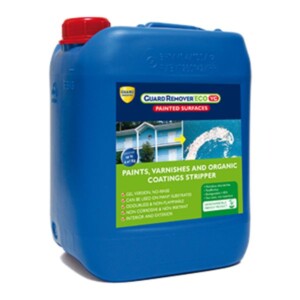
The ideal choice of efflorescence remover for brick walls is a specialized product developed specifically for use on construction surfaces. Guard Remover Eco Efflorescence & Cement is designed for the efficient removal of efflorescence and cement stains from mineral surfaces without altering their appearance.
Its areas of application include:
Brick walls
Concrete surfaces
Masonry
Natural stone
Building facades
Main features of Guard Remover Eco Efflorescence & Cement include:
- Effective removal of white salt deposits
- Efficient removal of cement stains after construction work
- Restoration of the original appearance of the surface
- Suitable for use on different mineral building surfaces
- Ideal solution for post-construction cleaning
Conclusion: Protect Your Brick Walls from Future Efflorescence
For additional protection against moisture-related problems, surfaces can be treated with special breathable products from the ProtectGuard® or ImperGuard® series.
How to remove efflorescence from brick walls permanently is not just about removing the white stains. The key lies in eliminating existing salt deposits through professional efflorescence removal while also reducing the moisture levels responsible for their formation.
Whether you are maintaining a residential, commercial, or new construction project, using the right brick cleaning solutions is essential for keeping surfaces looking good and ensuring long-lasting performance.
Brick Cleaning Solutions to Restore Your Walls
For tough white stains and cement marks on bricks, you can use our Guard Remover Eco Efflorescence & Cement solution to restore the appearance of brick, concrete, masonry, and natural stone surfaces.
Guard Industry has been a trusted name in surface protection for over 30 years. As a family-owned French company, we develop high-performance solutions that help clean, protect, and preserve mineral building materials.
Today, Guard Industry serves customers in more than 60 countries and has been supporting projects across India since 2009 with products that deliver effective cleaning and long-term protection.
Talk to us now to learn more about our brick cleaning solutions.
📞 Call: +91 7829807395
🌐 Website: www.guardindustry.co.in
Follow us for more building maintenance tips and innovative surface protection solutions.
FAQs
To remove efflorescence permanently, you need to do more than clean the white deposits. Using a professional efflorescence remover, followed by a breathable protective treatment such as ProtectGuard® or ImperGuard®, can help reduce the chances of the problem returning.
The most common causes of efflorescence include water penetrating the masonry through cracks, damaged mortar joints, poor drainage, leaking gutters, or inadequate waterproofing. As long as moisture continues to move through the wall, efflorescence is likely to return.
A dedicated masonry cleaner is the best option. Guard Remover Eco Efflorescence & Cement is specially formulated to remove white salt deposits and cement residue from brick, concrete, masonry, natural stone, and building facades without damaging the surface when used as directed.
No. Bleach and many household cleaners are not designed for mineral building materials and may damage the surface or fail to remove the salt deposits effectively. It is always recommended to use a specialised efflorescence remover.
Yes. Once the surface is clean and completely dry, applying a breathable water-repellent treatment, such as products from the ProtectGuard® or ImperGuard® range, can help reduce water penetration while allowing the masonry to breathe. This helps minimise the chances of efflorescence returning.
To reduce the risk of recurring efflorescence:
Repair cracks and damaged mortar joints.
Fix leaking gutters and downpipes.
Improve drainage around the building.
Remove existing salt deposits with a professional cleaner.
Apply a breathable water-repellent treatment such as ProtectGuard® or ImperGuard® after cleaning.