The best algae stain remover effectively eliminates tough algae stains from building materials like concrete and stone while preserving the surface and supporting environmental safety. Guardindustry’s eco-friendly remover, designed for Indian climates, offers a sustainable and durable solution that works in harmony with proper sealing and maintenance to prevent future stains.
Key points:
- Algae stains result from algae growth combined with metal particle bonding on damp surfaces, making them hard to remove.
- Effective removers are non-corrosive, eco-friendly, and specifically formulated for porous materials like concrete and stone.
- Guardindustry’s proprietary remover targets metal-algae bonds and suits tropical and monsoon conditions.
- Prompt treatment and understanding water chemistry, including pH balance, enhance stain removal effectiveness.
- Long-term prevention requires sealing surfaces, managing moisture, and regular cleaning to inhibit algae growth.
| Name | Description | Pros | Cons | Price Range |
|---|---|---|---|---|
| Guardindustry Eco-Friendly Algae Remover | Proprietary remover formulated for Indian climates, targeting algae stains on concrete and stone | Eco-friendly, non-corrosive, effective on tough stains, sustainable | Availability may be region-specific | Moderate |
| AquaDoc Liquid Algaecide | Pool maintenance algaecide, non-foaming and copper-free | Suitable for water treatment, various sizes available | Not formulated for building materials | Low to Moderate |
| Pool Pumice Stone and Stainless Steel Brush Set | Physical tools for removing rust and calcium deposits associated with algae stains | Helps remove tough spots without scratching surfaces | Requires manual effort, limited chemical action | Low |
Best Algae Stain Remover for Building Materials
Algae stains on building materials like concrete and stone can be tough to remove without causing damage. The best algae stain remover is an eco-friendly, non-corrosive product specifically formulated for these surfaces, especially tailored to suit the Indian climate. Guardindustry’s proprietary algae stain remover stands out by effectively breaking down stains while preserving material integrity and supporting sustainability.
Key Takeaways
- Algae stains form from algae growth and metal particle bonding on damp building surfaces.
- Effective algae stain removers are eco-friendly and designed for concrete and stone.
- Guardindustry offers a proprietary remover tailored for Indian climates and materials.
- Understanding how algae removers work helps in applying the right product promptly.
- Long-term prevention requires sealing surfaces and maintaining dry, clean conditions.
Understanding Algae Stains on Building Materials
Algae stains develop when algae, simple aquatic plants, grow on damp and shaded surfaces such as concrete and stone. These organisms thrive in moist environments where organic debris accumulates. The stains become challenging because they often involve chemical bonds formed between algae and metal particles like iron or copper embedded in the surface. This bonding creates stubborn discoloration that is difficult to clean off with generic methods.
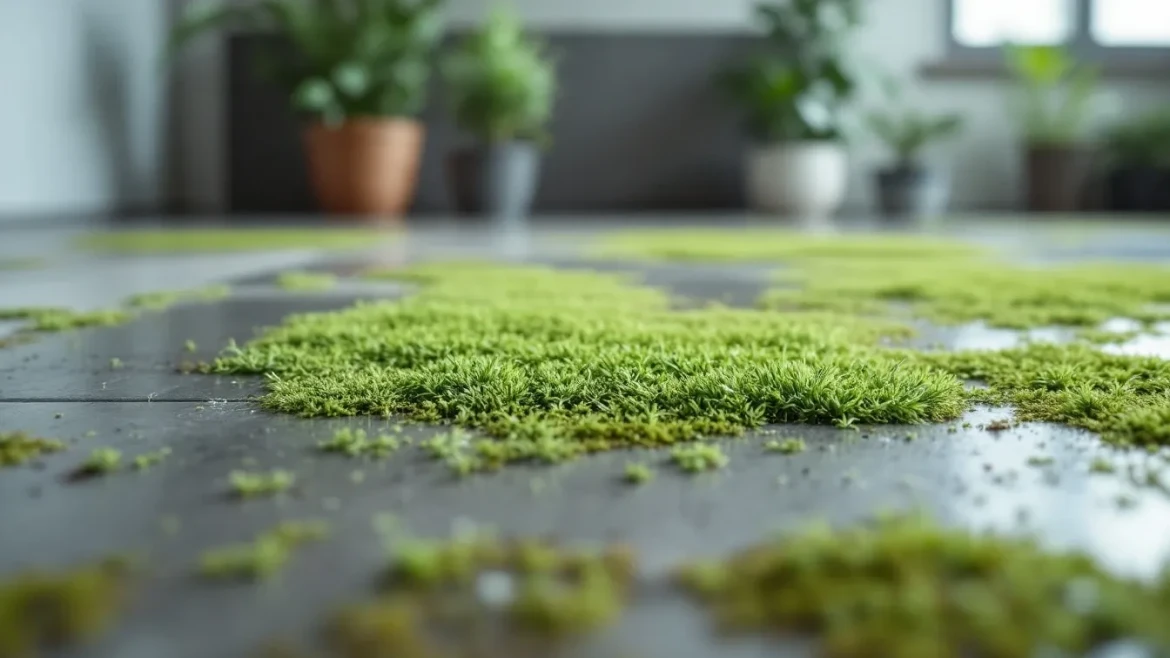
Unlike moss, which has a fuzzy texture, or mildew, which appears powdery and grayish, algae form a slimy, greenish film that can make surfaces slippery and unsightly. Recognizing these differences is important to choose the correct cleaning approach.
Properly understanding this biology and chemistry is essential for selecting an effective algae stain remover and achieving lasting results. For more on protecting your surfaces, see our concrete sealing guide.
Algae Growth Conditions on Building Materials
Algae thrive in environments where moisture lingers, such as shaded patios, damp walls, or poorly drained areas. Concrete and stone surfaces that retain water or organic debris provide an ideal substrate for algae colonization. Factors like heavy rainfall, high humidity, and lack of sunlight accelerate algae growth. Understanding these conditions helps in both treatment and prevention strategies.
Chemical Bonding and Stain Formation
The persistent stains are not solely due to algae cells but also result from chemical interactions between algae and metal ions like iron and copper present in building materials or water sources. These metal ions can oxidize and bind with organic compounds from algae, forming complex stains that penetrate porous surfaces. This process explains why simple cleaning or chlorine treatments often fail to remove stains completely.
Best Algae Stain Remover Products for Building Materials
The best algae stain removers for concrete and stone are eco-friendly, non-corrosive formulations that effectively break down algae and associated stains without harming the substrate. Guardindustry’s proprietary eco-friendly algae remover is specially designed for Indian climates, offering durability and sustainability that generic pool or aquarium products cannot match.
Generic pool algae removers often focus on water treatment and may contain harsh chemicals unsuitable for porous building materials. Aquarium removers are formulated for aquatic life and typically lack the strength or compatibility needed for stone and concrete.
Our product features:
- Patented formulations targeting metal-algae bonding chemistry
- Non-corrosive, safe for stone and concrete
- Eco-friendly ingredients reducing environmental impact
- Long-lasting effectiveness in tropical and monsoon conditions
Selecting the right product involves considering the surface type, climate, stain severity, and environmental impact. Notably, 63% of pool owners experience algae stains annually, underscoring how common and persistent these stains can be. This statistic highlights the importance of specialized removers for building materials exposed to similar conditions.
Examples of Effective Algae Stain Removers
- Guardindustry Eco-Friendly Algae Remover: Formulated for Indian climates, this remover targets stubborn stains on concrete and stone while maintaining environmental safety.
- AquaDoc Liquid Algaecide: Popular in pool maintenance, available in various sizes treating up to 2,500 gallons, with non-foaming, copper-free formulas. Though primarily for pools, it demonstrates the importance of selecting size and formulation appropriate to the application.
- Pool Pumice Stone and Stainless Steel Brush Set: Useful for physical removal of rust and calcium deposits associated with algae stains, suitable for tough spots on stone surfaces.
Explore our Guardindustry eco-friendly algae remover for a solution tailored to your needs.
Understanding How Algae Removers Work
Algae removers function by chemically breaking down the algae cells and disrupting the metal bonds that cause persistent stains. Effective removers maintain a balanced pH to avoid damaging surfaces and often include clarifiers that help lift debris from the material.
Prompt treatment is crucial. The longer algae remain, the deeper stains embed into porous materials, making removal harder and risking surface degradation. Using the wrong product or delaying treatment can worsen stains, spreading them or embedding particles further.
A clear understanding of water chemistry, particularly pH balance and metal presence, guides the proper use of algae removers, ensuring effective stain breakdown without harming the substrate.
Role of pH and Water Chemistry
Maintaining a pH between 7.2 and 7.6 is optimal for algae removal treatments. Deviations can reduce the effectiveness of algaecides and potentially damage surfaces. Metals like iron and copper, often present due to water sources or building material composition, catalyze stain formation. Removers that chelate or neutralize these metals prevent further bonding and staining.
Mechanical Assistance in Removal
In addition to chemical treatments, physical methods such as brushing with non-abrasive tools help dislodge algae and associated deposits. Products like pumice stones or stainless steel brushes can be used carefully on robust surfaces to enhance stain removal without scratching.
Clarifiers and Their Function
Clarifiers in algae removers bind suspended particles, allowing easier removal through rinsing or vacuuming. This helps restore surface clarity and prevents redeposition of algae residues.
Preventing Algae Stains Long Term
Permanent algae stain prevention requires a combination of proper surface sealing, moisture control, and maintenance. Sealing concrete and stone creates a barrier that inhibits algae growth and stain penetration. Regular cleaning removes organic debris that fuels algae.
Guardindustry’s eco-friendly products integrate well with surface sealers, offering sustainable protection suited to India’s varied climates. Maintenance plans tailored to local conditions can reduce algae recurrence effectively.
Key prevention strategies include:
- Applying compatible sealers promptly after cleaning
- Ensuring good drainage to keep surfaces dry
- Scheduling routine cleaning to remove organic matter
- Adjusting maintenance frequency based on weather patterns
Importance of Surface Sealing
Sealing porous surfaces like concrete and natural stone prevents water absorption and organic matter ingress, both of which are prerequisites for algae growth. Breathable sealers allow moisture vapor to escape while blocking liquid water, maintaining surface integrity and reducing slip hazards.
Moisture and Drainage Management
Designing and maintaining effective drainage systems around patios, walkways, and building exteriors reduces standing water and dampness. This limits algae-friendly environments and extends the lifespan of building materials.
Routine Cleaning and Debris Removal
Regular removal of leaves, dirt, and other organic debris deprives algae of nutrients. Using eco-friendly cleaning agents and gentle scrubbing maintains surface condition and prevents algae establishment.
How Algae Stain Removers Complement Sealers
Algae stain removers and surface sealers work hand-in-hand. While removers eliminate existing stains, sealers form a protective film on concrete and stone, preventing algae spores from settling and staining the surface again.
Sealers recommended for algae-prone areas are breathable, water-resistant, and durable to withstand environmental stress. Using Guardindustry’s quality concrete and stone sealers after algae removal extends the life of your surfaces and reduces maintenance frequency.
Selecting the Right Sealer
Choosing sealers compatible with the algae remover used ensures no adverse chemical reactions occur. Sealers with added biocidal properties can provide extra defense against algae colonization.
Application Timing and Technique
Applying sealers immediately after thorough cleaning and stain removal maximizes protection. Proper surface preparation, including drying and debris removal, is essential for sealer adhesion and performance.
For product details, see our range of Product Details.
Frequently Asked Questions
Algae stains can be removed using eco-friendly algae stain removers designed for porous surfaces like concrete and stone. These products chemically break down algae and associated stains without damaging the material, often combined with cleaning and sealing for best results.
The most effective algae removers are those tailored to the surface type and local conditions. Guardindustry’s proprietary eco-friendly remover is formulated specifically for concrete and stone in Indian climates, offering durable and sustainable stain removal.
Permanent algae stain removal involves timely application of effective removers, proper surface sealing to prevent regrowth, and maintenance to control moisture and organic debris that support algae growth.
Use algae stain removers specifically formulated for stone that are non-corrosive and eco-friendly. Avoid harsh chemicals and abrasive scrubbing that can damage stone; follow with sealing for protection.
Yes, Guardindustry offers eco-friendly algae stain removers designed for concrete surfaces that effectively remove stains while supporting sustainability and material durability.
Regular cleaning, ensuring good drainage, applying compatible sealers, and controlling moisture are key maintenance practices to prevent algae stains from recurring on building materials.
Conclusion
Choosing the best algae stain remover means prioritizing products that are eco-friendly, formulated for your specific building materials, and adapted to local climate challenges. Guardindustry’s proprietary algae remover meets these criteria, delivering effective, durable, and sustainable stain removal for concrete and stone surfaces. Combined with proper sealing and maintenance, you can protect your surfaces from algae stains long term, preserving their appearance and structural integrity.
For expert advice and product support, trust Guardindustry to help you maintain clean, safe, and beautiful building materials.