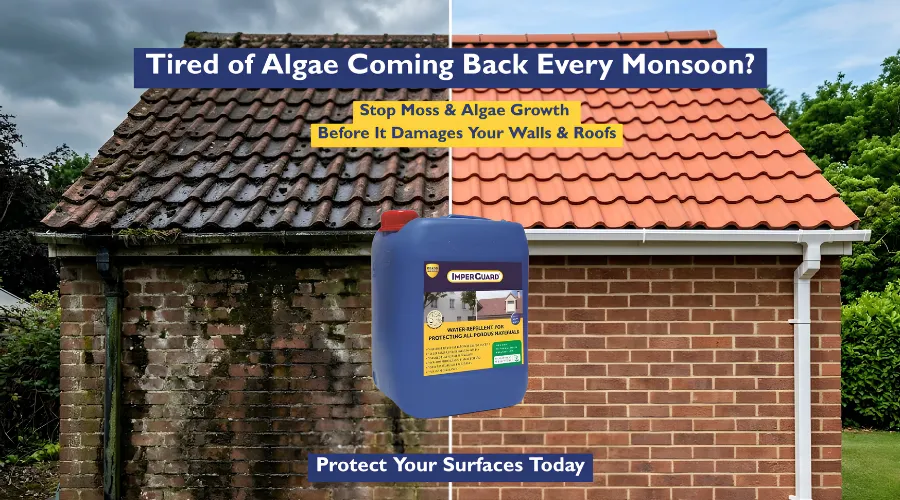
Ever had to remove algae from your walls and roofs only to find that it keeps coming back after some months?
This is among the most prevalent challenges that arise in humid/rainy regions – especially those with abundant moisture, shade, pollution, and improper drainage. While most people concentrate on removal, the real question should be about why algae keep regrowing.
If the surface absorbs more moisture, algae and moss continue regrowing even if you keep cleaning your surface. Thus, the best thing you can do is not simply cleaning your surface but taking measures to prevent its recurrence in the future.
Through this blog post, you’ll discover:
- The reasons behind the return of algae and moss
- Surface damage caused over time
- How to stop moss and algae from regrowing on your walls and roofs
Why Moss & Algae Keep Coming Back
Many think that algae are formed due to dust. However, algae are actually formed because of moisture.
Wall surfaces and roofs are regularly exposed to:
Rainwater, Humidity, Pollutants, Shaded and damp areas, Moisture in the form of water absorbed by porous materials Where there is persistent moisture, algae and moss will grow readily.
Algae will form on:
- Wall surfaces outside
- Terraces
- Concrete roofs
- Stonework
- Building corners
If there is no adequate roof moisture barrier, the same problem will keep happening again and again.
Why Cleaning Alone Is Not Enough
One of the main myths is that pressure or chemical cleaning would solve everything.
Indeed, cleaning removes algae, but what will happen after the rainy season? Moisture gets into the substrate, and algae appear again.
This is why there are so many buildings covered by algae spots despite regular maintenance. Thus, what you need to do in order to get rid of algae is make the surface less permeable and more resistant to algae growth.
What Actually Causes Moss & Algae Growth?
1. Moisture Absorption
The porous nature of surfaces such as concrete, stones, and plaster makes them susceptible to absorbing moisture. With the accumulation of moisture in the surface, the growth of algae commences. This is the reason why waterproofing sealant is important to prevent algae formation.
2. Lack of Adequate Exposure to Sunlight
Areas that are not exposed to sunlight tend to dry very slowly. Examples of such areas include:
- North-facing walls
- Roofs
- Areas behind water tanks
- Damp areas
3. Poor Surface Protection
Without breathable wall protection, untreated surfaces are prone to absorbing moisture.
How to Stop Moss and Algae Growth on Walls and Roofs Long Term
“`html
1. Reduce Water Absorption
The most effective long-term solution is reducing how much water the surface absorbs. Instead of using thick coatings that trap moisture, a breathable water repellent treatment for concrete and stone works better.
It helps:
- Repel rainwater
- Reduce dampness
- Minimize algae-friendly moisture
This becomes the foundation of effective roof algae protection.
2. Use Breathable Protection Instead of Film Coatings
Many coatings fail because they create a thick layer over the surface. Over time, trapped moisture causes:
- Peeling
- Blistering
- Surface damage
A better solution is using non film forming wall protection that allows the surface to breathe while still repelling water. This improves long-term wall algae prevention.
3. Protect High Exposure Areas Early
Roofs and exterior walls receive maximum exposure to:
- Rain
- Pollution
- UV rays
- Humidity
Waiting until algae becomes visible usually means the surface has already absorbed significant moisture. Preventive protective coating for roofs and walls helps reduce maintenance and recurring cleaning costs.
4. Keep Surfaces Clean and Dry
Simple maintenance also helps:
- Remove dirt regularly
- Ensure proper drainage
- Avoid water stagnation
- Trim plants touching walls
These small steps reduce the conditions that encourage moss formation.
Why Long-Term Protection Matters
The presence of algae is not only a cosmetic issue. In time, problems caused by moisture may include:
- Weakness of the surface
- Craze cracking
- Damage to paintwork
- Moisture marks
- Increased costs for maintenance
That is why a good algae treatment helps save money on future cleaning while protecting the surface for the long term.
Picking the Right Solution to Prevent Moss and Algae Growth
In the selection of your protection solution, seek those that provide:
- Water repellency
- Breathability
- Protection with no change in appearance
- Compatibly with concrete, stones, and exterior walls
- Durability
This will help enhance both performance and aesthetics.
Conclusion
If algae and moss continue appearing on your walls or roofs, the issue is most likely moisture-related.
Knowing how to prevent moss and algae from growing on walls and roofs begins by addressing water absorption issues and proper surface protection.
Rather than constantly washing off green spots season after season, it will pay off to invest in a roof moisture barrier and wall algae protection to ensure that your structure remains beautiful and protected for years to come.
For those interested in effective solutions to protect their roofs from algae and exterior walls against algae, ImperGuard can offer long-lasting protection against water infiltration and create an invisible waterproof layer on porous surfaces.
It offers:
- Decreased water absorption
- Increased moisture resistance
- Long-lasting algae protection
- Protection for concrete, stone, roofs, and exterior walls
Reach out to Guard Industry now to get the necessary wall and roof products for your roofs and walls!